
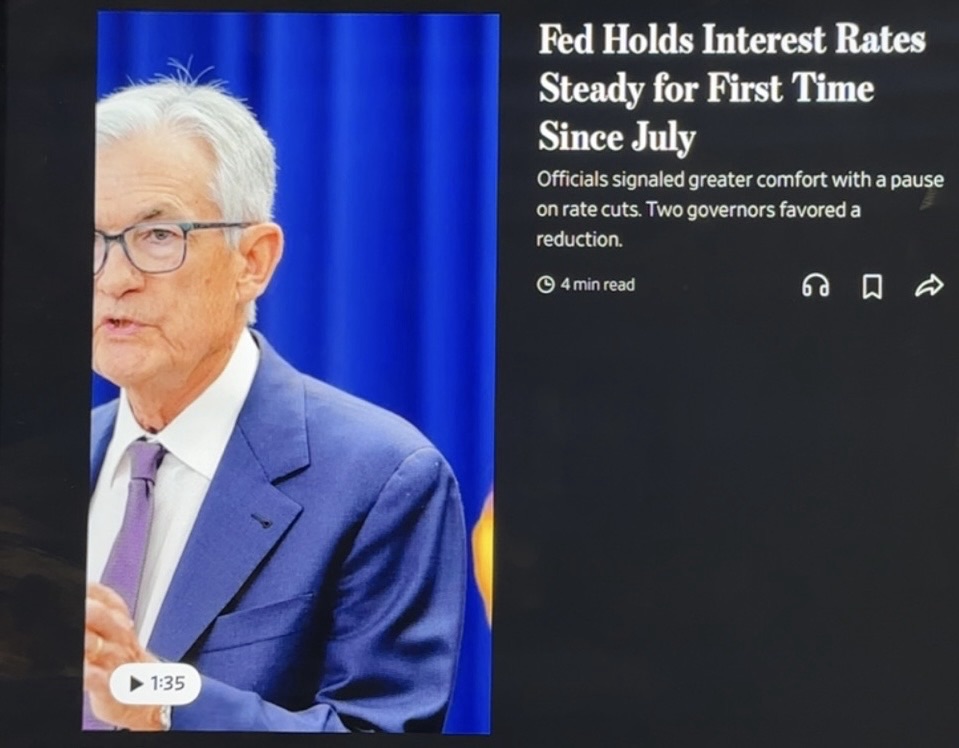
Job gains remain low, inflation still elevated. Unchanged rates. Monetary policy is appropriate. Economic activity resilient and expanding. Housing weak. Govt shutdown weakened growth last quarter but should boost growth this quarter. Pce close to 3% Mainly due to tariffs (one time price increases). Services are continuing to see disinflation. Near term Inflation expectations declined,longer term expectations fall within the feds goal of 2% inflation.
Kept rates the same after 75 basis points of cuts last year spread across 3 cuts. 2 dissents: Stephen Myron & Chris Waller who both wanted to cut by a quarter
Question and answer sesh:
- Job market distortion still the case for the drop in unemployment rate as stable?
Distortion still there but we’re getting through them. Economic activity has improved which is good for the labor market. (Bullish economy)
- Timeline for rate cuts pushed back based on what we thought at last meeting in December?
Incoming data shows “clear” improvement for growth. Inflation as expected. Labor market showing stabilization. A stronger forecast. They’re well positioned right now and are staying data dependent.
- Policy is close to the higher end of the neutral range. Is fed still planning on moving to the middle end of neutral?
It’s hard to look at policy based on the incoming data and think that it’s restrictive. It’s only loosely neutral or somewhat restrictive. Now they’re good to wait and watch the data.
- How’d the committee feel about pausing this meeting?
This meeting had broad support for waiting. Only 2 dissents. The 2 risks the fed watch which are inflation increasing and labor cracking have both diminished a little bit.
- Has tariff effects on prices already moved through the economy?
A lot of it has. And that’s good because that’s a one time price increase and not due to demand. The expectation is that tariffs will peak and come down assuming no new tariff news beyond current levels (would allow for the fed to weaken policy) or if the labor market gets worse. Raising rates is not anyone’s base case right now.
- How much of the labor market weakening we seen was related to immigration and the govt shutdown?
Growth in labor supply has came to a halt driven by stop in immigration. Supply came down and demand came down even more which is why unemployment went up. Other forms of data also point to softening but we may have bottomed out is how I viewed his response.
Jerome Powell term ends may 15. First meeting with new fed chair is June 17th. For now, markets are betting on June — pricing roughly a 60% probability of a cut. Whether that happens will depend on two things the Fed made clear today: inflation continuing to cool as tariffs fade, and labor market risks not reaccelerating.